Navigation
Install the app
How to install the app on iOS
Follow along with the video below to see how to install our site as a web app on your home screen.
Note: This feature may not be available in some browsers.
More options
You are using an out of date browser. It may not display this or other websites correctly.
You should upgrade or use an alternative browser.
You should upgrade or use an alternative browser.
TALL TALES
- Thread starter Richie
- Start date

Richie
Well-Known Member
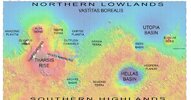
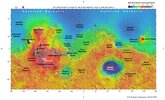
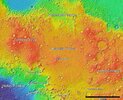
WOW!Peter started looking at maps of the Valles Marinarias and the Hesperia Plain regions.
View attachment 3812
View attachment 3811
View attachment 3813
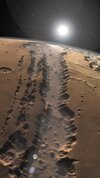
A picture from space of the massive Valles Marinarias.
View attachment 3814

Grier
Well-Known Member
Peter researched geological structures of the Hesperia Plain regions and the Valles Marineris. Other Scientists joined in with their own professional perspectives.
Peter could not hide his interest in the Valles Marineris (The Grand Canyon of Mars) Even colours of deposits give clues to chemical composition, and being a very deep depression it's closer to Mars' centre with a slightly thicker atmosphere too, with water trapped in ice. The essence of life.
Here's the Wiki Scientific description Craig which I found interesting:
Just skimming it even. Apparently it's a major feature of Mars' geology!
Dimensions: Valles Marineris is the largest canyon system in the solar system, stretching over 4,000 km (2,500 miles) across the Martian equator. It is up to 200 km wide and reaches depths of up to 7–11 km (roughly 4–7 miles).
Formation: It is not a river-carved canyon like Earth's Grand Canyon; rather, it is a massive tectonic rift that widened over time. It likely formed as the crust thickened and buckled under the weight of the nearby Tharsis volcanic region to the west.
Regions:
Noctis Labyrinthus: Located on the western edge, it is a jumbled, heavily fractured terrain with high, massive blocks.
Chasmata (Ius, Melas, Candor, Coprates): A central series of deep, interconnected canyons that contain thick layered sediments (possibly volcanic ash or ancient lake beds).
Outflow Channels: The eastern end of the canyon empties into the northern plains of Chryse Planitia, suggesting it served as a channel for massive floods.
Features: It contains steep walls, massive landslide deposits, and potentially glacial ice at its base.
Wikipedia +6
Hesperia Planum (Hesperia Plain)
Location: A vast upland plain located to the northeast of the Hellas impact basin, serving as the type region for the Hesperian Period.
Geological Character: It is characterized by extensive, flat, lava-filled plains, with volcanic deposits that are up to a few hundreds of meters thick.
Ridges: The region is covered with small "wrinkle ridges" formed by the compression of volcanic plains as the planet cooled.
Volcanic Origin: The lavas were likely derived from nearby volcanic centers, including Hadriaca Patera and Tyrrhena Patera.
Hydrology: The Hesperia region is associated with the early stages of catastrophic flooding on Mars, with large outflow channels—such as Reull Vallis, Dao, Niger, and Harmakhis Valles—originating from or passing through it.
Lunar and Planetary Institute +5
Connection: Hesperian Activity
The Hesperia Planum and Valles Marineris are linked by the massive geological activity of the Hesperian epoch. As the Tharsis volcanoes grew to the west, the resulting stresses caused tectonic rifting (Valles Marineris) and massive volcanic eruptions (Hesperia Planum). These events also caused large-scale melting of subsurface ice, leading to catastrophic floods that carved the outflow channels seen in both regions.
Peter could not hide his interest in the Valles Marineris (The Grand Canyon of Mars) Even colours of deposits give clues to chemical composition, and being a very deep depression it's closer to Mars' centre with a slightly thicker atmosphere too, with water trapped in ice. The essence of life.
Here's the Wiki Scientific description Craig which I found interesting:
Just skimming it even. Apparently it's a major feature of Mars' geology!
Dimensions: Valles Marineris is the largest canyon system in the solar system, stretching over 4,000 km (2,500 miles) across the Martian equator. It is up to 200 km wide and reaches depths of up to 7–11 km (roughly 4–7 miles).
Formation: It is not a river-carved canyon like Earth's Grand Canyon; rather, it is a massive tectonic rift that widened over time. It likely formed as the crust thickened and buckled under the weight of the nearby Tharsis volcanic region to the west.
Regions:
Noctis Labyrinthus: Located on the western edge, it is a jumbled, heavily fractured terrain with high, massive blocks.
Chasmata (Ius, Melas, Candor, Coprates): A central series of deep, interconnected canyons that contain thick layered sediments (possibly volcanic ash or ancient lake beds).
Outflow Channels: The eastern end of the canyon empties into the northern plains of Chryse Planitia, suggesting it served as a channel for massive floods.
Features: It contains steep walls, massive landslide deposits, and potentially glacial ice at its base.
Wikipedia +6
Hesperia Planum (Hesperia Plain)
Location: A vast upland plain located to the northeast of the Hellas impact basin, serving as the type region for the Hesperian Period.
Geological Character: It is characterized by extensive, flat, lava-filled plains, with volcanic deposits that are up to a few hundreds of meters thick.
Ridges: The region is covered with small "wrinkle ridges" formed by the compression of volcanic plains as the planet cooled.
Volcanic Origin: The lavas were likely derived from nearby volcanic centers, including Hadriaca Patera and Tyrrhena Patera.
Hydrology: The Hesperia region is associated with the early stages of catastrophic flooding on Mars, with large outflow channels—such as Reull Vallis, Dao, Niger, and Harmakhis Valles—originating from or passing through it.
Lunar and Planetary Institute +5
Connection: Hesperian Activity
The Hesperia Planum and Valles Marineris are linked by the massive geological activity of the Hesperian epoch. As the Tharsis volcanoes grew to the west, the resulting stresses caused tectonic rifting (Valles Marineris) and massive volcanic eruptions (Hesperia Planum). These events also caused large-scale melting of subsurface ice, leading to catastrophic floods that carved the outflow channels seen in both regions.
Last edited:
Richie
Well-Known Member
Wellham: So Peter what is yours and our colleagues, Pederson and Webkes hypothesis on Valles Marineris . Could it harbor underground Martians. Also is there a chance of their being an under ground lake which would certainly sustain life.Peter researched geological structures of the Hesperia Plain regions and the Valles Marineris. Other Scientists joined in with their own professional perspectives.
Peter could not hide his interest in the Valles Marineris (The Grand Canyon of Mars) Even colours of deposits give clues to chemical composition, and being a very deep depression it's closer to Mars' centre with a slightly thicker atmosphere too, with water trapped in ice. The essence of life.
Here's the Wiki Scientific description Craig which I found interesting:
Just skimming it even. Apparently it's a major feature of Mars' geology!
Dimensions: Valles Marineris is the largest canyon system in the solar system, stretching over 4,000 km (2,500 miles) across the Martian equator. It is up to 200 km wide and reaches depths of up to 7–11 km (roughly 4–7 miles).
Formation: It is not a river-carved canyon like Earth's Grand Canyon; rather, it is a massive tectonic rift that widened over time. It likely formed as the crust thickened and buckled under the weight of the nearby Tharsis volcanic region to the west.
Regions:
Noctis Labyrinthus: Located on the western edge, it is a jumbled, heavily fractured terrain with high, massive blocks.
Chasmata (Ius, Melas, Candor, Coprates): A central series of deep, interconnected canyons that contain thick layered sediments (possibly volcanic ash or ancient lake beds).
Outflow Channels: The eastern end of the canyon empties into the northern plains of Chryse Planitia, suggesting it served as a channel for massive floods.
Features: It contains steep walls, massive landslide deposits, and potentially glacial ice at its base.
Wikipedia +6
Hesperia Planum (Hesperia Plain)
Location: A vast upland plain located to the northeast of the Hellas impact basin, serving as the type region for the Hesperian Period.
Geological Character: It is characterized by extensive, flat, lava-filled plains, with volcanic deposits that are up to a few hundreds of meters thick.
Ridges: The region is covered with small "wrinkle ridges" formed by the compression of volcanic plains as the planet cooled.
Volcanic Origin: The lavas were likely derived from nearby volcanic centers, including Hadriaca Patera and Tyrrhena Patera.
Hydrology: The Hesperia region is associated with the early stages of catastrophic flooding on Mars, with large outflow channels—such as Reull Vallis, Dao, Niger, and Harmakhis Valles—originating from or passing through it.
Lunar and Planetary Institute +5
Connection: Hesperian Activity
The Hesperia Planum and Valles Marineris are linked by the massive geological activity of the Hesperian epoch. As the Tharsis volcanoes grew to the west, the resulting stresses caused tectonic rifting (Valles Marineris) and massive volcanic eruptions (Hesperia Planum). These events also caused large-scale melting of subsurface ice, leading to catastrophic floods that carved the outflow channels seen in both regions.
Meanwhile back at the lower Planitias an under ground invasion was under way with Wallace and O'Donnell leading their respective special forces into the bowels of Mars. The breathing apparatus was no longer needed once the large metal doors were closed which meant the troops could carry more weaponry. By 500 mts no Martians had been discovered which meant they had the element of surprise. But not for long....
Grier
Well-Known Member
Spring: "It's quite possible indeed" with agreement from Pederson and Webkes. "We'll know more when we have a closer look. Drones can do an initial reconaissance with hyperspectral recordings, and to take some soil samples. Even from space the soil there has different hues. That's very interesting."Wellham: So Peter what is yours and our colleagues, Pederson and Webkes hypothesis on Valles Marineris . Could it harbor underground Martians. Also is there a chance of their being an under ground lake which would certainly sustain life.
"It's also very deep at 7 to 11km, 200km wide and 4,000 km long! With ice, hence water, hence fuel. The Grand Canyon is only about 1.9 km deep" said Pederson, "it's enormous!"
" ... and a thicker Martian Atmosphere, being an atmospheric sinkhole" said Webkes, "again a greater propensity for Martian life to exist, perhaps even a variety of Martian life forms? I'm keen to have a look."
"Even a lake deeper down where it's warmer closer to Mars's core", said Webkes, "a core more solid than Earth's and without magnetic poles, .... meaning ...,.. . and .... , but..."
'Cup of Tea Dr Wellham, or Coffee?'
 said Peter.
Last edited:
Grier
Well-Known Member
Medical Doctor Lieutenant Ley, Cpr Blunt and her 10 medics were put with Aussie Captain Wallace's men. Both Aussie Military. Ley monitored the under ground atmosphere and found sufficient Oxygen in it for human needs. Not great tho.Meanwhile back at the lower Planitias an under ground invasion was under way with Wallace and O'Donnell leading their respective special forces into the bowels of Mars. The breathing apparatus was no longer needed once the large metal doors were closed which meant the troops could carry more weaponry. By 500 mts no Martians had been discovered which meant they had the element of surprise. But not for long....
She and her medics were put at the rear, with Cpr Blunt by Ley's side. "Smells like Vegemite" said Blunt.
Richie
Well-Known Member
Colonel along with German Major Hilda Muller. Yes there are women in the Space Force ranks Terry. Their adjutants are captains Wally Gustafson and Reinhart Weber.Captain Wallace
Grier
Well-Known Member
Lieutenant Susette Ley is a woman too. An Army Doctor from Warburton days and well known by Col Dunning.
Whilst on the radio with Captain Wallace Ley raised an arm to stop her 10 medics as the Lieutenant in the rearguard did likewise, with handsigns from Cpr Blunt conferring.
Whilst on the radio with Captain Wallace Ley raised an arm to stop her 10 medics as the Lieutenant in the rearguard did likewise, with handsigns from Cpr Blunt conferring.
Grier
Well-Known Member
With five Darts and their Drones other scientists wanted a seat even from a distance. Pederson and Webkes wanted in.
Peter said to all:
"This region of Valles Marineris is extremely interesting.
Not all animal species on Earth suffer from radiation, like our Cockroach as an example. Tough bacteria, worms, scorpions, .. Also Evolution to give rise to species more tolerant to the radioactive rays going through a thin atmosphere, ... and breathing, in other ways Mars' thin atmosphere. Life adapts."
Quick smart a Scientific panel was formed with Pederson and Webkes or proxies volunteering to be put into two separate Darts doing analyses and controlling a drone each.
"This venture also has a Military aspect to it Professors, first and foremost" Said Sgt Turnbull.
Peter said to all:
"This region of Valles Marineris is extremely interesting.
Not all animal species on Earth suffer from radiation, like our Cockroach as an example. Tough bacteria, worms, scorpions, .. Also Evolution to give rise to species more tolerant to the radioactive rays going through a thin atmosphere, ... and breathing, in other ways Mars' thin atmosphere. Life adapts."
Quick smart a Scientific panel was formed with Pederson and Webkes or proxies volunteering to be put into two separate Darts doing analyses and controlling a drone each.
"This venture also has a Military
aspect to it Professors, first and foremost" Said Sgt Turnbull.
Richie
Well-Known Member
I know just wasnt aware she was to be used in combat. Happy to have her as part of our Tall Story mate.Lieutenant Susette Ley is a woman too.
Richie
Well-Known Member
Colonel James Wallace.Captain Wallace
Richie
Well-Known Member
The Martians appeared from no where and took Wallace by surprise with the bugs getting off several laser bursts cutting down several men at the front. The Earth men returned fire with their superior EMP pulse lasers obliterating a large group of bugs. But the Martians were clearly aware of the invasion as a second wave appeared squeaking loudly as they fired into Wallaces ranks. These Martian tunnels were rather narrow which limited the degree of casualties, Wallace mused..
'Take down these bugs" he yelled as a withering burst of his laser cut down a dozen Martians at once. But they kept on coming...

'Take down these bugs" he yelled as a withering burst of his laser cut down a dozen Martians at once. But they kept on coming...
Last edited:
Grier
Well-Known Member
I played Ley in Warburton in the early part of our story Craig.I know just wasnt aware she was to be used in combat. Happy to have her as part of our Tall Story mate.
Lots of characters to play.
Ah, Wallace is a Colonel not a Captain. No worries.
Grier
Well-Known Member
Cpr Blunt with 5 Medics were able to get to the wounded, dying and dead. Colonel Wallace had Marines cover the medics retrieval of the wounded.The Martians appeared from no where and took Wallace by surprise with the bugs getting off several laser bursts cutting down several men at the front. The Earth men returned fire with their superior EMP pulse lasers obliterating a large group of bugs. But the Martians were clearly aware of the invasion as a second wave appeared squeaking loudly as they fired into Wallaces ranks. These Martian tunnels were rather narrow which limited the degree of casualties, Wallace mused..
'Take down these bugs" he yelled as a withering burst of his laser cut down a dozen Martians at once. But they kept on coming...
View attachment 3834
By himself Cpr Blunt wearing a shiny silvery cloak grabbed two of the wounded near the front line and dragged them both away. The light Martian gravity greatly helped as Blunt raced towards Lieutenant Ley with his badly burnt patients with laser beams flashing behind.
Last edited:

Grier
Well-Known Member
Drones were put in stealth mode and from 3km high started scanning along the Valles Marineris.With five Darts and their Drones other scientists wanted a seat even from a distance. Pederson and Webkes wanted in.
Peter said to all:
"This region of Valles Marineris is extremely interesting.
Not all animal species on Earth suffer from radiation, like our Cockroach as an example. Tough bacteria, worms, scorpions, .. Also Evolution to give rise to species more tolerant to the radioactive rays going through a thin atmosphere, ... and breathing, in other ways Mars' thin atmosphere. Life adapts."
Quick smart a Scientific panel was formed with Pederson and Webkes or proxies volunteering to be put into two separate Darts doing analyses and controlling a drone each.
"This venture also has a Military
The Darts quietly followed the Drones from 20km above them soaking up the data sent.
"There's something moving down there" yelled Webkes controlling a Drone. It looks like some giant Ant like creatures are feeding off the carcass of some giant Worm!
"Good Grief" said Pederson "they're big and look very dangerous!"
Last edited:
Richie
Well-Known Member
Yes Terry you are the more creative writer, something I have always struggled with, having started two books but never able to finish either. I admire writers that can bring characters alive from the page of a book. Only characters I was able to bring alive were from an acting stage, which gave me great satisfaction.I like the detail and nuance more
I am having morning insomnia, reason I am posting so early. Got up for a leak and was unable to get back to sleep. I will now catch up on the latest news then try to catch some more shut eye...
Grier
Well-Known Member
Forty years of Role Playing, mostly as a facilitator, is what best exercised and strengthened my imagination Craig.
I tried getting into acting myself but ended up as a stage hand and making the sets. That was fine and I learned a lot about power tools! Even free tickets to the plays.
Sorry to hear about your insomnia Craig, that's a bummer.
I often like a cup of warm milk before bed, and a wind down. That helps me sleep. Like you I get up to have a leak at times ...
I tried getting into acting myself but ended up as a stage hand and making the sets. That was fine and I learned a lot about power tools! Even free tickets to the plays.
Sorry to hear about your insomnia Craig, that's a bummer.
I often like a cup of warm milk before bed, and a wind down. That helps me sleep. Like you I get up to have a leak at times ...
Last edited:
Grier
Well-Known Member
Moving along the atmosphere rich giant and 11km deep Canyon Valles Marineris the drones saw more animals and signs of them, like ominous looking Holes and Cave entrances, some larger ones were geologically ancient Lava tubes.Drones were put in stealth mode and from 3km high started scanning along the Valles Marineris.
The Darts quietly followed the Drones from 20km above them soaking up the data sent.
"There's something moving down there" yelled Webkes controlling a Drone. It looks like some giant Ant like creatures are feeding off the carcass of some giant Worm!
"Good Grief" said Pederson "they're big and look very dangerous!"
Two more species were soon observed being Giant Cockroachs
 and Scorpions.
  . Lots of small holes everywhere ... even the odd flying giant Ant below 2 km of the valley's bottom and helped fly with Mars' light gravity, said professor Webkes despite their size. Other signs of life too occasionally, both animal and vegetable in Mars' Oasis of life it would seem....


 🕸🕷🏵
🕸🕷🏵
 🕸🕷
🕸🕷


Last edited: